





For as long as memory stretches, church was a soft word to me—
a word wrapped in warmth,
a place where hearts gathered,
where worship felt like breathing,
where belonging arrived as naturally as morning light.
It was home.
It was grounding.
It was God’s gentle whisper in community form.
But lately, something has shifted.
The sanctuary I once knew has grown sharp edges—
conflict in the corners,
judgment drifting through the hallways,
manipulation tucked behind polite smiles,
and emotional wounds disguised as concern.
It is heartbreaking to watch a place built for love
crack open into something unrecognizable.
I spent most of my years sheltered by better churches—
not perfect,
but pure in their intention.
Growing up, we had no walls or stained glass,
just a small circle of Christians
from every denomination,
gathering on Sunday evenings to lift their voices as one.
No politics.
No power struggles.
Only worship,
only friendship,
only a kind of unity that felt almost holy.
Chennai gave us that gift too—
a young, earnest church
filled with people who came for one reason alone: to seek God.
Those years shaped my children,
filled them with laughter and learning,
and left behind memories I treasure deeply.
For that, I will always be grateful.
And then came Adelaide.
And with it, a storm I never saw coming.
Here, church felt different—
not like a sanctuary,
but like a stage.
People paraded newly earned wealth,
staking invisible claims as though God’s house were a territory to conquer.
It felt less like prayer
and more like politics.
Less like worship
and more like a club
where influence was the membership card.
Even the children were swept into it—
caught in currents of comparison and division.
Events that should have woven us into one body
were used instead to split the church into manageable pieces—
as if unity were something to fear,
and people were easier to rule
when they stood apart.
New families were greeted instantly—
not with the open arms of Christ,
but with the eager hands of recruiters.
Invitations poured in,
not to love them,
but to claim them.
Mark them.
Pull them into someone’s orbit.
And what baffled me most
was how easily so many surrendered to it—
as though choosing a “side”
were the highest calling of Christian life.
As though this chaos was normal.
As though this was church.
I expect such battles in the world,
but in the house of prayer?
Where hearts are meant to heal,
and burdens are meant to soften?
It left a hollow ache in me—
a quiet grief for the church I once knew,
and for the God whose love deserves better vessels than this.
In time, I found myself unable to pray.
Not in church—
not in the place that once felt like refuge,
not during the moments I needed it most.
When I was grieving the loss of a parent,
when my heart was at its heaviest,
church offered me no comfort.
I stood there, surrounded by worship,
yet unable to lift a single word to heaven.
Everything inside me felt numb.
Then one day, almost by chance,
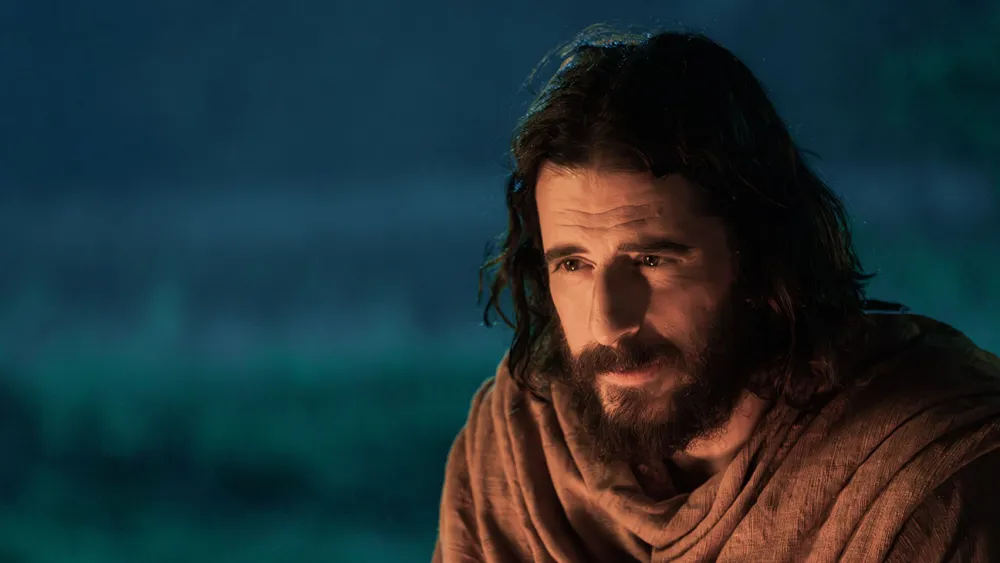
someone suggested I watch The Chosen.
Just a show, a story,
nothing more.
But through that screen,
grace found its way back to me.
Something in the way Jesus walked,
in the way compassion unfolded,
in the way love looked people in the eyes—
it stirred a spark buried deep
under the weight of hurt and disappointment.
And slowly,
almost imperceptibly,
faith began to breathe again.
It took a simple series to remind me
of a truth my father had taught me,
but I had forgotten amidst all the noise:
Faith was never meant to rest on the shoulders of people
or the walls of a church.
It was always meant to rest on God.
Maybe healing begins here—
in releasing the expectation
that wounded humans can perfectly reflect
a perfect God.
Church may falter.
People may fail.
Communities may fracture.
But God—
God remains.
Even when I stopped praying.
Even when I walked away.
Even when silence felt safer than faith.
He waited.
He sought me out.
He spoke through unexpected places—
even through a television series—
and reminded me gently
that He had never left.
I was simply grieving.
Simply hurting.
Simply trying to find my way back.
And now,
step by step,
I am.